Advantage Futures Adds BornTec CrossCheck: Implements Audit Trail Module to Strengthen Enterprise Compliance

[Chicago, Illinois] — BornTec, a leading provider of data management solutions and tools for financial markets, today announced that Advantage Futures (Advantage), a high volume Chicago based futures commission merchant with global reach, has selected the company’s CrossCheck Audit Trail module to strengthen its enterprise compliance program. The deployment is expected to facilitate compliance and support conformance with exchange and regulatory audit trail mandates.

The Audit Trail module automates the validation, structuring, and storage of audit trail data, ensuring firms remain compliant while reducing operational overhead.

“Our priority was to enhance the management of our audit trail requirements while simultaneously reducing manual work for our team,” said Joe Guinan, Chairman and Chief Executive Officer at Advantage. “The CrossCheck Audit Trail module provides a single record source which is easy to access and cost-effective to maintain.”

“Organizations are under pressure to manage regulatory requirements and improve operational standards,” said Derek Haworth, Chief Executive Officer at BornTec. “We’re excited to partner with Advantage to deliver measurable outcomes: reduced manual work, improved audit readiness, and stronger resilience.”

About BornTec

BornTec is a leading provider of data management and software solutions for the financial industry. Our CrossCheck platform provides centralized data aggregation and tools that simplify trading operations, surveillance, audit, and compliance by unlocking the value of consolidated data for banks, brokers, FCMs, trading firms, and more. Learn more at borntec.com.

About Advantage Futures
Advantage ranks among the highest-volume futures brokers, processing 434 million contracts in 2025 from a diverse client base domiciled in 43 countries, territories, and jurisdictions worldwide. Advantage provides access to 25 futures exchanges around the world while operating an agency-model brokerage and not speculatively trading for its own account; avoiding any conflict of interest by not competing with client trading. Advantage also provides technology-related services for clients, including server hosting. For more information visit advantagefutures.com.

More

Traders Want Service! A funny thing happened on the road to electronic trading: firms forgot about the customer

A recent survey of buy-side traders conducted by Coalition Greenwich revealed a surprising result: the number one issue for respondents wasn’t technology, execution quality, or access to liquidity, it was customer service and desk coverage. In the survey, nearly two out of three named customer service as their most important factor, ahead of all other issues, when choosing a broker.

This doesn’t surprise us here at BornTec. As a provider of solutions for e-trading support, risk, compliance, and operations with a deep knowledge of the trading industry, we know that customer service is a key differentiator when it comes to sell side success. At a time when teams are pressured by cost cutting and larger workloads on one hand and customer dissatisfaction on the other, our CrossCheck platform is a great tool to help address the needs of the trading community and deliver exceptional buy-side support.

Addressing Challenges with CrossCheck from BornTec

The “US equity broker selection: It’s the service, stupid” report from Coalition Greenwich revealed what most sell-side support staff already know: customers are often unhappy with the level of service and support that they receive from their brokers. As trading has gotten bigger and faster, sell-side support has failed to keep up and, in many cases, has fallen behind as cost pressures have forced teams to try to do more with less and trading has become more complex.

BornTec understands this dilemma and we have built our CrossCheck solution to directly address the need to improve customer service and client coverage. Specifically, CrossCheck offers:

Unified Order Flow Data In One Workspace for Maximum Efficiency
Sell-side coverage teams often juggle multiple platforms and fragmented workflows from exchanges, ISVs, execution platforms, and internal systems. CrossCheck consolidates all of this order flow and data into a single, unified workspace, giving full visibility at a glance. This single-pane approach streamlines processes and allows support teams to monitor activity, prioritize outreach, and respond in real time with minimum effort and maximum impact.

Proactive Alerting and Reports to Stay One Step Ahead
Rather than waiting for issues to crop up—or for the client to call—CrossCheck employs intelligent alerting to flag anomalies, execution issues, or operational errors as they occur. Alert triggers ensure that the sell-side can “be the first on the phone,” offering insights or remediation, sometimes before the buy-side even notices an issue, enabling your team to provide the white glove service that the buy-side demands.

Human + Machine Synergy to Deliver Augmented Coverage
CrossCheck doesn’t replace the human touch—it enhances it. And at a time where budgets are constrained and qualified team members are hard to come by, CrossCheck is a tool that answers both needs by delivering a cost-effective solution that supports a sell-side team. Automated alerts and reports cut down on manual work and inform coverage teams when and where attention is needed – now.

Sourcing Success with CrossCheck from BornTec

“Even as electronic execution becomes the norm,
the human touch has emerged as the ultimate differentiator.”
Jesse Forster, Coalition Greenwich
“US equity broker selection: It’s the service, stupid”

Technology isn’t always the answer. Over the past several years, sell-side firms have learned the hard lesson that they won’t win or retain business by handing out screens to the buy-side and expect that all of their problems will be taken care of. In the big picture, something has been lost as a ruthless drive towards efficiency has often hollowed out the ranks of back and middle office teams, leaving behind a fast and highly automated landscape that is sorely lacking for support. Here at BornTec we recognize this challenge and build our CrossCheck solutions and modules to meet both the technical and customer support needs for e-trading support, risk, compliance, operations, and technology teams. Contact us to find out how we always put the customer first – and how you can too.

Jennifer Burrows is VP of Client Services and Support at BornTec, a technology solutions firm that provides data management and tools to support digital integration, operational resilience and surveillance, risk, compliance, and regulatory reporting functions in financial markets. Contact us to learn more.

Visit Coalition Greenwich to request a copy of their research report, “US equity broker selection: It’s the service, stupid”

More

Merging an Elephant with a Rhinoceros: Thoughts from the iFX Expo International in Cyprus

An old joke from childhood asks the question:

“What do you get when you cross an elephant with a rhinoceros?”

The answer (“Eleph-ino” or, more directly, “Hell if I know!”) can be applied to the current state of the environment for retail trading of FX in Europe. Two types of trading – CFDs (Contract for Difference) and futures – have been blending for some time and the ultimate results of this combination are open to question. However, like both an elephant and a rhinoceros, the result is going to be big.

This issue was front and center at the recent iFX Expo International in Cyprus.  Brokers and traders there reported that a combination of factors is leading to a further blurring of the lines between the two types of trading and this is creating some unique requirements and challenges for all concerned.

The Negative and Positive Factors Affecting CFDs

CFDs have long been a significant factor in retail trading in Europe and elsewhere but that have been under pressure for some time. In addition to an outright ban on retail trading of CFDs in the U.S., ESMA has been tightening the regulatory regime around them for the past decade, with major restrictions added in 2018. Of late, Spain banned the promotion and distribution of CFDs to retail clients in 2023 while other regulators, including in the UK, Germany, France and Italy, have taken action to restrict retail access to CFDs or are closely monitoring the markets with further action possible in the near future. Further, access to CFD markets by “prop trading firms”¹ in the U.S. has been significantly reduced following actions by MetaQuote to restrict gray market licensing of FX market data to trading platforms.

All is not doom and gloom, however, as trader loyalty to CFD products remains high and new ways to utilize CFDs, primarily for institutions in energy markets and both retail and institutional in lightly-regulated crypto markets, are growing. Retail brokers and fintechs aren’t standing still either, with the former branching out by offering access to futures markets and the latter using their superior technology and marketing capabilities to build market share at the expense of legacy competitors. Finally, major exchanges like CME Group, Cboe Global Markets, and Eurex have exhibited an interest in growing their retails franchises and were out in force at iFX.

What It Will Take to Succeed in the “Eleph-ino” Future

Looking at the big picture, the changes and challenges for the CFD markets are driven in large part by regulation and innovation. Even as the regulatory landscape starts to tilt toward a lighter hand, the restrictions on retail trading are here to stay and the continued pressure of innovation is going to raise the level of competition between incumbents and fintechs. The melding of the futures and CFD markets will continue, making it critical that brokers offer integrated OTC and listed products on a robust technology platform that provides a seamless experience for users and integrated reporting and risk management capabilities for the broker/fintech. Data integration and handling is key…and that’s where BornTec can help.

Both the CFD and futures markets are huge – and elephant and rhino, as it were – and it pays to understand opportunities in both, getting to “I know” instead of “Eleph-ino”.

Andy Jennings is EMEA Director of BornTec, a technology solutions firm that provides data management and tools to support digital integration, operational resilience and surveillance, risk, compliance, and regulatory reporting functions in financial markets. Contact us to learn more.

¹The prop firms offer access to traders on a simulated basis and then make actual trades in the firm’s name with successful ideas, sharing a percentage of the profits with the trader, and thereby circumventing the U.S. retail ban.

More

Changes from Exchanges: Interesting Developments from the LME, Eurex and MGEX

You can’t spell “exchange” without “change” and the first half of 2025 is slated to deliver some highly anticipated changes at several exchanges. The launch of LME 10, an enhanced drop copy service at Eurex, and migration of MGEX trading to MIAX technology are all interesting developments that not only bear watching but also may signal new business opportunities.

LME 10
Long delayed and eagerly anticipated, the launch of LMEselect v10 will deliver a number of new benefits along with several challenges for market participants. It represents a much needed updating of technology and offers lower latency, new pre-trade risk management capabilities, and new functionality including persistent and GTC orders. At the same, v10 is entirely new technology and will have impacts that affect the full stack of middle and back office functions. The large and diverse members of the LME trading community have work to do to ensure that all processes function smoothly after the switch over.

LMEselect v10 is scheduled to launch on March 24, 2025.

Enhanced Drop Copy at Eurex
There has long been a gap when it comes to trading data at Eurex and the Enhanced Drop Copy (EDC) / Exchange Drop Copy Interface (EDCI) will rectify this omission. 

Specifically, data pertaining to “Lean” orders has not been available in previous drop copy versions. Lean orders were designed to improve throughput and reduce latency for high-frequency trading but their exclusion from drop copy services left a gaping hole in order, transaction, and risk management for internal risk managers, brokers, and FCMs. EDC “is designed for participants seeking to enhance their pre-trade risk monitoring capabilities, or who specifically want to gain a comprehensive overview of their order inventory including lean orders, e.g. for the purpose of reconciliation.” As such, it is a valuable missing piece from the Eurex risk puzzle and its inclusion will enhance insights for traders, risk managers, and executives.

EDCI is also slated to go-live on March 24, 2025.

MGEX and MIAX
When it comes to futures exchanges, the Minneapolis Grain Exchange (MGEX) isn’t very  near the big leagues. Their largest contract, Minneapolis Hard Red Winter Wheat, traded a record 3.1 million contracts in 2024 but, in an industry where monthly volume in agricultural futures regularly tops 250 million contracts, that barely moves the needle for most industry participants. 

However, MGEX is of interest at least in part due to who their parent is. Miami International Holdings (MIAX) is a dynamic exchange operator and technology firm beyond MGEX and they have shown themselves to be capable innovators as they have grown volumes, primarily in equity options, and evolved their corporate structure. The migration of MGEX from CME Globex to its homegrown MIAX Futures Onyx platform could set the stage for continued innovation and growth. It bears paying attention to what MIAX is up to.

Migration to the Onyx platform is expected in Q2 2025.

Staying on top of exchange changes
The trading industry is always in a state of evolution and it is important to stay on top of what’s new because today’s innovation often becomes tomorrow’s opportunity. The upcoming changes at the LME, Eurex, and MGEX/MIAX vary in degree of importance from major to minor but all deserve the attention of industry professionals. It pays to be prepared for where the next opportunity may be coming from and BornTec is here to assist in making the most of those opportunities.

For more information

Andy Jennings is EMEA Director of BornTec, a technology solutions firm that provides data management and tools to support operational resilience and surveillance, risk, compliance, and regulatory reporting functions in financial markets. Contact us to learn more.

More

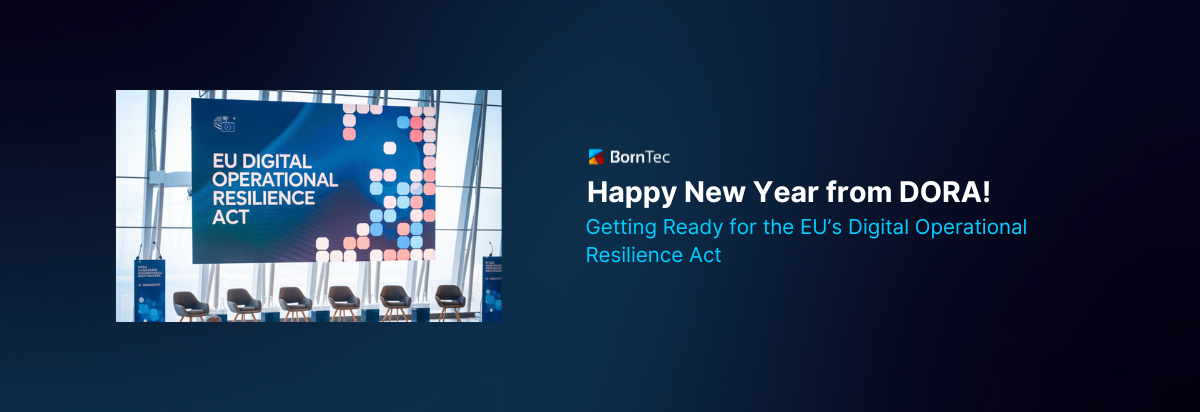
Happy New Year from DORA! Getting Ready for the EU’s Digital Operational Resilience Act

Turning the calendar page to December naturally leads to reflection about the year that has just passed as well as a gaze forward to see what looms in the future. In the present case, 2024 was a year many referred to as organized chaos that was characterized by plenty of growth but also plenty of disruption. Now, whilst we prepare for 2025 and set our tasks and goals for the year with the hopes of conditions that are more “normal” alas, we have to deal with DORA.

The EU’s Digital Operational Resilience Act (DORA) comes into effect in January 2025. DORA differs from MIFiD II because it’s short on explicit rules and long on suggested guidelines. Many of the customers and prospects that we talk to complain that they wish that regulators would “Tell me what you want me to do, and I will do it” while others boldly proclaim “This is nothing we are not already doing!” Both of these responses miss the mark because DORA is designed to be self-reflective. So, whilst there will be a good measure of “hurry up and wait” to DORA, it is a good time to think about running yourself through the ringer. 

What Is DORA?

DORA is meant to address a perceived gap in EU financial regulation: how to address operational resilience in a 21st century enterprise. While it was possible in the past to construct a “high wall / wide moat” defense, that no longer works given the interconnected relationships with cloud providers and other third parties that modern businesses rely upon.

Instead of dealing with operational risks by simply allocating capital to cover potential losses, DORA goes deeper and wider to both help prevent disruptions in information and communications technology (ICT) and to have plans in place to handle them when they occur. Put another way, DORA goes beyond protection to mandate measures for detection, containment, recovery and repair as well. 

The five pillars of DORA are ICT Risk Management, Incident Reporting, Operational Resilience Testing, Third-Party Risk Management, and Information Sharing. Broadly, this means creating and maintaining a thorough risk management plan that includes procedures for incident reporting, regular testing programs, analysis of dependencies with third parties and plans to address any disruptions with them, and, perhaps most importantly, policies and procedures to share information on both the successes and challenges 

Getting to the Heart of DORA

Unlike past mandates like Dodd Frank and MIFiD II, DORA is less about specific rules and more about principles and objectives. This may change over time as DORA matures, but for now it’s important to realize that the key to compliance is to do the work of self reflection and analysis that meets both the letter and the spirit of the regulation. At this point, lawyers and consultants seem to be reaping the greatest amount of work (and profit) from DORA but that too will change over time.

At its heart, DORA is about reflection and analysis. Taking that perspective, it’s possible to make DORA work for your business now. In addition to meeting requirements, DORA is a good motivator and tool to examine current operations and identify gaps that require attention. In the long run, it will lead to better performance so why not get started sooner rather than later? Instead of treating DORA as an annoying cost of doing business, welcome it as an opportunity to get a step ahead of the competition.

DORA is About Data

All of the above is important but the core insight about DORA is that effective compliance will be entirely dependent on data. Are you confident that you will have access to all your trading data in real-time following an outage from all of your third-party providers? What about the data schema you require? Can you drive the trade processing “machines” without pulling in small armies of talented support staff to do so – if they’re even available!? Is it possible to extract disparate and siloed data sets from across your trading/middle office tech stack and then re-shape and normalize it for easy use?. All of these questions need to be addressed and steps need to be taken to address any gaps that appear.

In order to meet business needs for DORA and beyond, data is the key. Not only is access to your trading data fundamental to business continuity during unforeseen downtime, it also lays the foundation to improve operational efficiency from top to bottom. Not many can say “Yes” with confidence once they examine the issue because there are always outliers. However, trading Data is 100% interoperable if you lay the right technology foundations and this is a core competency for BornTec CrossCheck. Contact us to learn more about how we can support your efforts at operational resilience.

Video: BornTec CEO Derek Haworth Emphasizes Data Integrity and Operational Resilience at FIA Boca 2024

Andy Jennings is EMEA Director of BornTec, a technology solutions firm that provides data management and tools to support operational resilience and surveillance, risk, compliance, and regulatory reporting functions in financial markets. Contact us to learn more.

More

Helping Make the World Safe from Automated Trading: Customer Thoughts on the FIA White Paper

Continuing their tradition of market leadership, the Futures Industry Association (FIA) recently updated the white paper “Best Practices for Automated Trading Risk Control System Safeguards.” The white paper covers everything from pre-trade controls to post-trade analysis as they relate to automated trading and the FIA aptly points out that ALL market participants – exchanges, trading firms, brokers, clearing firms, and third-party service providers – have a role to play in ensuring that the highest standards are adopted and followed.

As a provider of a global trade aggregation platform, BornTec plays a key role in helping to address and manage some of the risks associated with automated trading. After a number of conversations with our customers about the role of third-party solutions like BornTec as it relates to the content of the white paper, three comments that came up time and again were “early warnings,” “adding another layer,” and “a better way.” These phrases describe how firms like BornTec are uniquely positioned to provide solutions that span the full universe of operational risk as it relates to automated trading and beyond.

Automated Trading Solutions: The Customer Perspective

In the complex web of interrelationships in the derivatives trading industry, third-party vendors are well positioned to deliver solutions that no other single industry participant can provide on their own. Our customers tell us that these solutions fall broadly into one of three categories: early warnings, adding another layer, and a better way. Here are examples of all three:

Early warnings

Every market participant knows that it is better to anticipate or head off an issue before it reaches a critical stage and a software vendor like BornTec is often ideally positioned to do just that. A case in point is with exchange message programs and message throttles, sections 3.3 and 3.4 respectively in the white paper. In both cases, a software solution is an excellent tool for monitoring activity to detect when message rates are climbing or limits are close to being breached, potentially identifying an issue before it becomes a problem.

Adding another layer

Markets are complex, with many moving parts, and adding additional views and checks can be a big help in unpacking complexity and monitoring activity. Two examples where a software provider can assist with automated trading are self match prevention and maximum order size. In the first case, software can provide monitoring across all execution platforms and in the latter it provides a view into limits that are in place across all systems. In both cases, the software solution offers a comprehensive view that no single provider, participant, or solution can deliver.

A better way

In some cases, a software solution is the best option, even when there are alternatives offered by other market participants.

For example, the white paper suggests that repeated automated execution limits should be set at the trader level but not with the broker or exchange. While there are valid reasons for doing so, the broker as well as exchanges have a role to play in monitoring disruptive activity and the real-time market surveillance functionality in CrossCheck can deliver in this regard without disrupting normal trading activity.

Another example applies to intraday position limits. While setting a maximum intraday position may work well at the trader level, doing so at the broker or exchange is both impractical and imprudent. However, in CrossCheck it is possible to simultaneously monitor intraday position limits across all systems, including ISVs and DMA, giving the only truly comprehensive picture of these limits.

Working Together Toward Market Excellence

The futures industry has always benefited from an approach to regulation and market management that is principles-based and the FIA continues that tradition with the AT white paper. While we agree with the FIA that the best practices outlined are the right direction for the industry, there are better alternatives in some cases and participants should first focus on a foundational element: ensuring that order and transaction flow data is captured in one place that is both reliable and accessible. Taking this approach will simplify the lift of implementing these practices and adapting to future controls.

With the FIA taking the lead, the futures and derivatives industry has a steward who continues to drive healthy market conditions that will benefit all participants. And while it may seem that many of the issues in the AT white paper have been debated for a quarter of a century, the truth is that the nature of market best practices will always be informed by what came before and that much is to be gained by taking a holistic and comprehensive view. BornTec looks forward to being a partner that contributes to the continued health and growth of the industry.

Derek Haworth is CEO of BornTec, a technology solutions firm that provides data management and tools to support operational resilience and surveillance, risk, compliance, and regulatory reporting functions in financial markets. Contact us to learn more.

More