Merging an Elephant with a Rhinoceros: Thoughts from the iFX Expo International in Cyprus

An old joke from childhood asks the question:

“What do you get when you cross an elephant with a rhinoceros?”

The answer (“Eleph-ino” or, more directly, “Hell if I know!”) can be applied to the current state of the environment for retail trading of FX in Europe. Two types of trading – CFDs (Contract for Difference) and futures – have been blending for some time and the ultimate results of this combination are open to question. However, like both an elephant and a rhinoceros, the result is going to be big.

This issue was front and center at the recent iFX Expo International in Cyprus.  Brokers and traders there reported that a combination of factors is leading to a further blurring of the lines between the two types of trading and this is creating some unique requirements and challenges for all concerned.

The Negative and Positive Factors Affecting CFDs

CFDs have long been a significant factor in retail trading in Europe and elsewhere but that have been under pressure for some time. In addition to an outright ban on retail trading of CFDs in the U.S., ESMA has been tightening the regulatory regime around them for the past decade, with major restrictions added in 2018. Of late, Spain banned the promotion and distribution of CFDs to retail clients in 2023 while other regulators, including in the UK, Germany, France and Italy, have taken action to restrict retail access to CFDs or are closely monitoring the markets with further action possible in the near future. Further, access to CFD markets by “prop trading firms”¹ in the U.S. has been significantly reduced following actions by MetaQuote to restrict gray market licensing of FX market data to trading platforms.

All is not doom and gloom, however, as trader loyalty to CFD products remains high and new ways to utilize CFDs, primarily for institutions in energy markets and both retail and institutional in lightly-regulated crypto markets, are growing. Retail brokers and fintechs aren’t standing still either, with the former branching out by offering access to futures markets and the latter using their superior technology and marketing capabilities to build market share at the expense of legacy competitors. Finally, major exchanges like CME Group, Cboe Global Markets, and Eurex have exhibited an interest in growing their retails franchises and were out in force at iFX.

What It Will Take to Succeed in the “Eleph-ino” Future

Looking at the big picture, the changes and challenges for the CFD markets are driven in large part by regulation and innovation. Even as the regulatory landscape starts to tilt toward a lighter hand, the restrictions on retail trading are here to stay and the continued pressure of innovation is going to raise the level of competition between incumbents and fintechs. The melding of the futures and CFD markets will continue, making it critical that brokers offer integrated OTC and listed products on a robust technology platform that provides a seamless experience for users and integrated reporting and risk management capabilities for the broker/fintech. Data integration and handling is key…and that’s where BornTec can help.

Both the CFD and futures markets are huge – and elephant and rhino, as it were – and it pays to understand opportunities in both, getting to “I know” instead of “Eleph-ino”.

Andy Jennings is EMEA Director of BornTec, a technology solutions firm that provides data management and tools to support digital integration, operational resilience and surveillance, risk, compliance, and regulatory reporting functions in financial markets. Contact us to learn more.

¹The prop firms offer access to traders on a simulated basis and then make actual trades in the firm’s name with successful ideas, sharing a percentage of the profits with the trader, and thereby circumventing the U.S. retail ban.
More

Changes from Exchanges: Interesting Developments from the LME, Eurex and MGEX

You can’t spell “exchange” without “change” and the first half of 2025 is slated to deliver some highly anticipated changes at several exchanges. The launch of LME 10, an enhanced drop copy service at Eurex, and migration of MGEX trading to MIAX technology are all interesting developments that not only bear watching but also may signal new business opportunities.

LME 10
Long delayed and eagerly anticipated, the launch of LMEselect v10 will deliver a number of new benefits along with several challenges for market participants. It represents a much needed updating of technology and offers lower latency, new pre-trade risk management capabilities, and new functionality including persistent and GTC orders. At the same, v10 is entirely new technology and will have impacts that affect the full stack of middle and back office functions. The large and diverse members of the LME trading community have work to do to ensure that all processes function smoothly after the switch over.

LMEselect v10 is scheduled to launch on March 24, 2025.

Enhanced Drop Copy at Eurex
There has long been a gap when it comes to trading data at Eurex and the Enhanced Drop Copy (EDC) / Exchange Drop Copy Interface (EDCI) will rectify this omission. 

Specifically, data pertaining to “Lean” orders has not been available in previous drop copy versions. Lean orders were designed to improve throughput and reduce latency for high-frequency trading but their exclusion from drop copy services left a gaping hole in order, transaction, and risk management for internal risk managers, brokers, and FCMs. EDC “is designed for participants seeking to enhance their pre-trade risk monitoring capabilities, or who specifically want to gain a comprehensive overview of their order inventory including lean orders, e.g. for the purpose of reconciliation.” As such, it is a valuable missing piece from the Eurex risk puzzle and its inclusion will enhance insights for traders, risk managers, and executives.

EDCI is also slated to go-live on March 24, 2025.

MGEX and MIAX
When it comes to futures exchanges, the Minneapolis Grain Exchange (MGEX) isn’t very  near the big leagues. Their largest contract, Minneapolis Hard Red Winter Wheat, traded a record 3.1 million contracts in 2024 but, in an industry where monthly volume in agricultural futures regularly tops 250 million contracts, that barely moves the needle for most industry participants. 

However, MGEX is of interest at least in part due to who their parent is. Miami International Holdings (MIAX) is a dynamic exchange operator and technology firm beyond MGEX and they have shown themselves to be capable innovators as they have grown volumes, primarily in equity options, and evolved their corporate structure. The migration of MGEX from CME Globex to its homegrown MIAX Futures Onyx platform could set the stage for continued innovation and growth. It bears paying attention to what MIAX is up to.

Migration to the Onyx platform is expected in Q2 2025.

Staying on top of exchange changes
The trading industry is always in a state of evolution and it is important to stay on top of what’s new because today’s innovation often becomes tomorrow’s opportunity. The upcoming changes at the LME, Eurex, and MGEX/MIAX vary in degree of importance from major to minor but all deserve the attention of industry professionals. It pays to be prepared for where the next opportunity may be coming from and BornTec is here to assist in making the most of those opportunities.

For more information

Andy Jennings is EMEA Director of BornTec, a technology solutions firm that provides data management and tools to support operational resilience and surveillance, risk, compliance, and regulatory reporting functions in financial markets. Contact us to learn more.

More

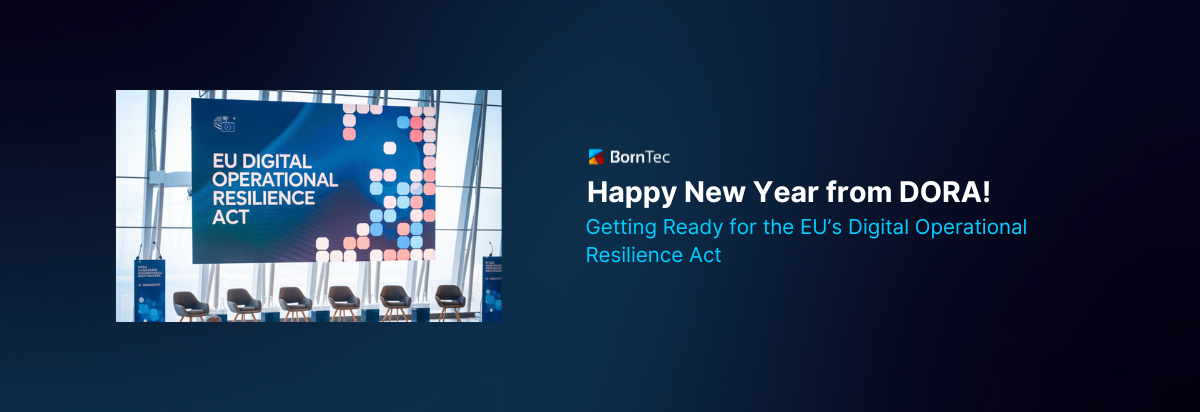
Happy New Year from DORA! Getting Ready for the EU’s Digital Operational Resilience Act

Turning the calendar page to December naturally leads to reflection about the year that has just passed as well as a gaze forward to see what looms in the future. In the present case, 2024 was a year many referred to as organized chaos that was characterized by plenty of growth but also plenty of disruption. Now, whilst we prepare for 2025 and set our tasks and goals for the year with the hopes of conditions that are more “normal” alas, we have to deal with DORA.

The EU’s Digital Operational Resilience Act (DORA) comes into effect in January 2025. DORA differs from MIFiD II because it’s short on explicit rules and long on suggested guidelines. Many of the customers and prospects that we talk to complain that they wish that regulators would “Tell me what you want me to do, and I will do it” while others boldly proclaim “This is nothing we are not already doing!” Both of these responses miss the mark because DORA is designed to be self-reflective. So, whilst there will be a good measure of “hurry up and wait” to DORA, it is a good time to think about running yourself through the ringer. 

What Is DORA?

DORA is meant to address a perceived gap in EU financial regulation: how to address operational resilience in a 21st century enterprise. While it was possible in the past to construct a “high wall / wide moat” defense, that no longer works given the interconnected relationships with cloud providers and other third parties that modern businesses rely upon.

Instead of dealing with operational risks by simply allocating capital to cover potential losses, DORA goes deeper and wider to both help prevent disruptions in information and communications technology (ICT) and to have plans in place to handle them when they occur. Put another way, DORA goes beyond protection to mandate measures for detection, containment, recovery and repair as well. 

The five pillars of DORA are ICT Risk Management, Incident Reporting, Operational Resilience Testing, Third-Party Risk Management, and Information Sharing. Broadly, this means creating and maintaining a thorough risk management plan that includes procedures for incident reporting, regular testing programs, analysis of dependencies with third parties and plans to address any disruptions with them, and, perhaps most importantly, policies and procedures to share information on both the successes and challenges 

Getting to the Heart of DORA

Unlike past mandates like Dodd Frank and MIFiD II, DORA is less about specific rules and more about principles and objectives. This may change over time as DORA matures, but for now it’s important to realize that the key to compliance is to do the work of self reflection and analysis that meets both the letter and the spirit of the regulation. At this point, lawyers and consultants seem to be reaping the greatest amount of work (and profit) from DORA but that too will change over time.

At its heart, DORA is about reflection and analysis. Taking that perspective, it’s possible to make DORA work for your business now. In addition to meeting requirements, DORA is a good motivator and tool to examine current operations and identify gaps that require attention. In the long run, it will lead to better performance so why not get started sooner rather than later? Instead of treating DORA as an annoying cost of doing business, welcome it as an opportunity to get a step ahead of the competition.

DORA is About Data

All of the above is important but the core insight about DORA is that effective compliance will be entirely dependent on data. Are you confident that you will have access to all your trading data in real-time following an outage from all of your third-party providers? What about the data schema you require? Can you drive the trade processing “machines” without pulling in small armies of talented support staff to do so – if they’re even available!? Is it possible to extract disparate and siloed data sets from across your trading/middle office tech stack and then re-shape and normalize it for easy use?. All of these questions need to be addressed and steps need to be taken to address any gaps that appear.

In order to meet business needs for DORA and beyond, data is the key. Not only is access to your trading data fundamental to business continuity during unforeseen downtime, it also lays the foundation to improve operational efficiency from top to bottom. Not many can say “Yes” with confidence once they examine the issue because there are always outliers. However, trading Data is 100% interoperable if you lay the right technology foundations and this is a core competency for BornTec CrossCheck. Contact us to learn more about how we can support your efforts at operational resilience.

Video: BornTec CEO Derek Haworth Emphasizes Data Integrity and Operational Resilience at FIA Boca 2024

Andy Jennings is EMEA Director of BornTec, a technology solutions firm that provides data management and tools to support operational resilience and surveillance, risk, compliance, and regulatory reporting functions in financial markets. Contact us to learn more.

More

Optimism with a Dash of Resignation: Derivatives Markets in Europe

Earlier this summer, the FIA released a survey of participants in the European derivatives markets and the findings were an interesting mix of optimism and resignation. The results reflect a healthy industry that sees global opportunities for growth along with promising new technologies to spur innovation that also recognizes the inescapable tide of rising regulatory responsibilities and cyber risks are burdens that won’t ever subside. Here in the waning days of summer, let’s take a look at some of the specifics before sharing a few thoughts from the perspective of BornTec.

Top Takeaways from the FIA / Acuiti Survey

The survey of 100 firms that are active in Europe was conducted by Acuiti on behalf of FIA. Respondents represented the full spectrum of the industry, from professional traders and exchanges all the way through to third-party software providers such as BornTec. Several themes emerged from their responses:

  • Disruptive cyber attacks are viewed as “the single greatest risk that the industry is currently facing.”
  • “There is a broad consensus…that the alphabet soup of European regulations has created a major burden for the industry.”
  • Most firms expect growth but think that the greatest opportunities in terms of both clients and trading volume will come from outside of Europe.
  • There is a perceived trade-off between efficiency and innovation, with the sell-side prioritizing efficiency and principal trading firms and exchanges showing more interest in innovative technologies such as AI and blockchain.
  • Post-Brexit, 45% of respondents believe that Paris will benefit most as a financial center, followed by 18% who said Amsterdam and 12% that selected Frankfurt.

Perspectives from BornTec

Like most industry-sponsored reports, the FIA/Acuiti survey doesn’t deliver any earth-shattering findings but if you sift the tea leaves a little bit there are some interesting takeaways beyond the headlines. Specifically, there is more of a story to tell when it comes to regulation.

On the surface, regulation emerges as a burden but there is more nuance to it than that. With respect to crypto, for example, adoption rates are being driven by sell-side firms that are “encouraged by the legal framework provided by the European Union’s Markets in Crypto Assets legislation” because it gives them greater certainty and security. And, while regulation has become such a constant that “when one framework takes effect another is usually coming down the line’, the report also states that “many also believe that regulation has strengthened the industry.”

The double-edged sword of regulation comes into sharper focus in the tradeoff between cyber risk and resilience. Fifty three percent (53%) of survey respondents named cyber risk as the biggest threat to their firm and this challenge is being met in part by the EU’s Digital Operational Resilience Act (DORA). The report states that “since the ION attack (in 2023), much attention has turned to fallbacks and redundancy systems” and DORA directly addresses this type of challenge. 

Technology has a big part to play in meeting ever increasing regulatory obligations. “Clearing brokers and other sell-side firms are prioritizing gains in efficiency from their investments in technology” as they face a squeeze between fee pressure and rising regulatory costs. As an example of this, BornTec is taking two decades of knowledge in connectivity and networking and applying it in the software layer. The result: a platform offering full order life-cycle visibility across ISVs and exchanges with powerful alerting, leading to organizational efficiency gains and regulatory cover.

Regulation may be a burden, it’s true, but is also a means to assist in the development of new  markets, as in crypto, or address pressing real world concerns as with cyber risk and the upcoming implementation of DORA. In any case, it should be abundantly clear that strong, centralized regulation, like death and taxes, is an inescapable fact of life for the derivatives markets. It’s for that reason that the optimism of market participants is tempered with a touch of resignation.

You can find the full report on the FIA website.

Andy Jennings is Director of EMEA for BornTec, a technology solutions firm that provides data management and tools to support operational resilience and surveillance, risk, compliance, and regulatory reporting functions in financial markets. Contact us to learn more.

More

The Top Three Needs for Operational Resilience in Derivatives Markets: Takeaways from FIA IDX 2024

FIA IDX celebrated its 16th year in London last week and revealed an industry that was much like the previous year’s edition: dealing with continued global turbulence, racking up impressive volume numbers, and facing the challenge of perpetual regulatory expansion. Conference attendance was strong and a general feeling of optimism prevails but there are a number of challenges being addressed.

Here are a few takeaways from the event:

  • FIA CEO and Chairman Walt Lukken kicked off the event with remarks that used song titles as a framing device. Derek and the Dominoes, Marvin Gaye / Tammi Terrell, Thomas Dolby, Robert Johnson / Cream, and Adele (possibly) all got shout-outs as Lukken focused on some of the key issues facing the industry. Of particular interest were results from a newly released report from Acuiti and FIA that found that 53% of market participants believe that regulatory burdens are the biggest challenge for the derivatives business over the next five years. On top of that, 40% do not believe that EU regulations are proportionate to the risks of their activity. 
  • An audience poll conducted during the “Operations of the future in a digital world” also delivered some interesting stats. When asked to name the main areas of post-trade processing that require attention, the evergreen areas of allocations, give-ups, and average pricing (57%) were followed closely by data standardization / lineage (52%). While the former has received great attention through the work of DMIST, the latter has not. Data will require much more attention.
  • A second question in the poll asked which technologies will have the biggest impact on operational efficiency and cloud (20%) and low-code / no-code (20%) were dramatically overshadowed by AI (61%). No surprise there but, as is common so far, practical and market-ready AI solutions are in short supply, particularly for the back office.
  • In Europe and the UK, conversation about regulation is generally followed by even more conversation about regulation and 2024 is no exception. The EU EMIR REFIT began in April, the UK EMIR REFIT comes at the end of September, and DORA becomes fully operational in January 2025. With the EMIR REFIT, the number of reportable fields increases by over 57%, from 129 to 203 (204 in the UK) and DORA is a whole other matter, dramatically expanding requirements for operational resilience in ways that are new and unique. 
  • Given the survey results on data standardization and focus on increasing regulatory requirements, it should come as no surprise that operational resilience is at the forefront of objectives for many of the panelists. The DORA regulations mandate resilience and are going to put a microscope over best practices and bring to light the real world implication and risk of monitoring “important and critical” third party service provided for the regulated financial institutions. DORA can be viewed in essence as regulation by proxy of the financial technology service providers. We will have to wait until Q3 to begin to fully understand the effort and lift required. 

Responding to the Challenges

Whether it’s responding to regulations like EMIR REFIT and DORA, fulfilling the promise of AI, or boosting operational resilience the top three needs are data, data, and data. When it comes to meeting new and complex reporting requirements, ensuring the reliability of operations, or extracting reliable and consistent results from AI operations, data must be of the highest quality. There is no doubt that regulatory requirements will increase, just as it is certain that advances in AI will have profound impacts across nearly all areas of business. The best thing to do now is concentrate on making sure that all of your data is maximized to the greatest extent possible. This is a primary focus for BornTec for 2024 and beyond.

Andy Jennings is Director of EMEA for BornTec, a technology solutions firm that provides data management and tools to support operational resilience and surveillance, risk, compliance, and regulatory reporting functions in financial markets. Contact us to learn more.

More